

Deep TMS Therapy for Teens (Ages 15-17)
Watching your teen struggle with depression can be overwhelming, especially when medications haven’t helped. At Mindfully Fairfield, OH, we offer FDA-approved Deep TMS therapy for teens ages 15–17.
Speak with our team today to check insurance coverage and see if Deep TMS is right for your teen

Clinically Proven Effectiveness of Deep TMS in Teen Depression
According to a study of Deep TMS published in Psychiatry Research in 2025, researchers analyzed real-world outcomes from over 1,200 adolescents with treatment-resistant major depressive disorder who had not responded to multiple medications.
After completing 36 sessions of Deep TMS, 75.0% of teens showed a clinical response and 58.3% achieved remission based on the Hamilton Depression Rating Scale (HDRS-21). At 30 sessions, response and remission rates were also strong, reaching 58.3% and 48.6% respectively.
Improvements often began early in treatment. The median time to response was around 13 sessions, while remission typically occurred by about 20 sessions, suggesting a relatively rapid onset of benefit for many patients.
Among patients with co-occurring anxiety, 66.4% experienced a response and 40.2% achieved remission on the GAD-7 scale by the end of treatment. Overall, the treatment was well tolerated, with side effects similar to standard TMS, such as mild headache and scalp discomfort, and no new safety concerns identified.
Take this 1-minute short survey to see if TMS is right for you.
When Medication Alone Isn’t Enough
Did you know that only two antidepressants are FDA-approved for treating depression in teenagers? And in clinical trials, fewer than 1 in 4 teens reached remission on the most commonly prescribed one.
So if your teen has tried medication without much relief, this is unfortunately very common. It’s known as medication-resistant depression, and it doesn’t mean your teen can’t get better. It means they may need a treatment that works differently than medication does.
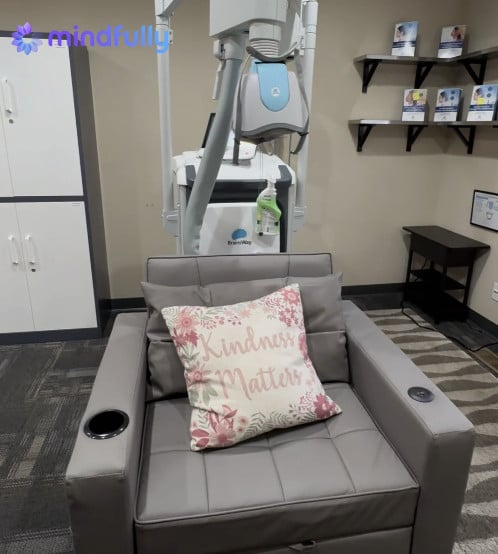
What is Deep TMS Therapy & How Does It Work for Teen Depression?
Deep TMS (Transcranial Magnetic Stimulation) is a non-invasive, in-office treatment. It uses gentle magnetic pulses to stimulate the areas of the brain that regulate mood. Unlike medication, nothing enters the body, so there are typically no systemic side effects.
What to expect during a session:
- Comfortable setting: Your teen sits in a chair while a clinician places a cushioned helmet on their head.
- Short sessions: Each one lasts about 20 minutes.
- Awake and alert: There’s no anesthesia or sedation. TMS is not shock therapy and does not involve surgery.
- No downtime: Your teen can return to school, sports, or other activities right after each session.
Why families choose Mindfully
Mindfully holds a BrainsWay Select badge, which means we’re one of the leading TMS providers in Ohio. We use BrainsWay’s patented H1-Coil technology, which reaches broader and deeper areas of the brain than traditional TMS coils.
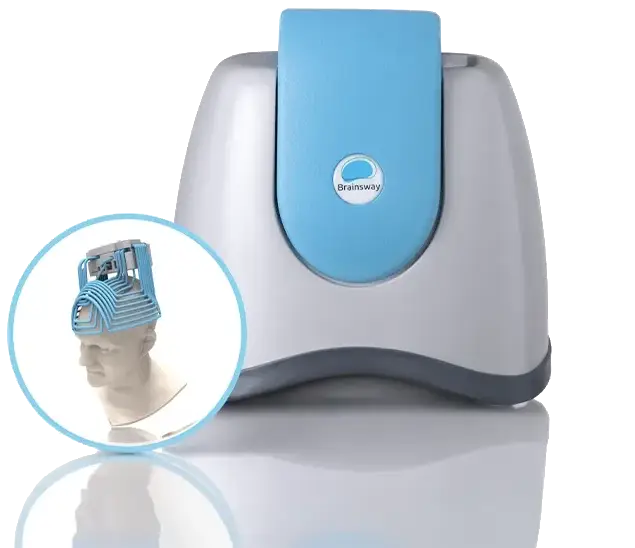
TMS Was FDA Cleared for Adolescents in 2025
For years, TMS was only available to adults. That changed in August 2025, when the FDA reviewed real-world data from over young patients and cleared BrainsWay Deep TMS for adolescents.
For teens, TMS is approved as an addition to their current care rather than a replacement for it. Your teen can continue seeing their therapist and prescriber while receiving TMS. We coordinate with their existing care team.

Does TMS Therapy Work for Teenagers?
The research behind the FDA clearance followed 1,257 patients ages 11 to 21 across 56 clinics. These were difficult cases. On average, each patient had already tried 4.5 antidepressant medications without success.
After a full course of Deep TMS, about 75% of patients responded and 58% reached remission based on clinician ratings.
For comparison, a well-known trial found that teens who switched to a new antidepressant after the first one failed had about a 48% response rate after three months. TMS results were considerably higher, and they were statistically similar to the results seen in adults.
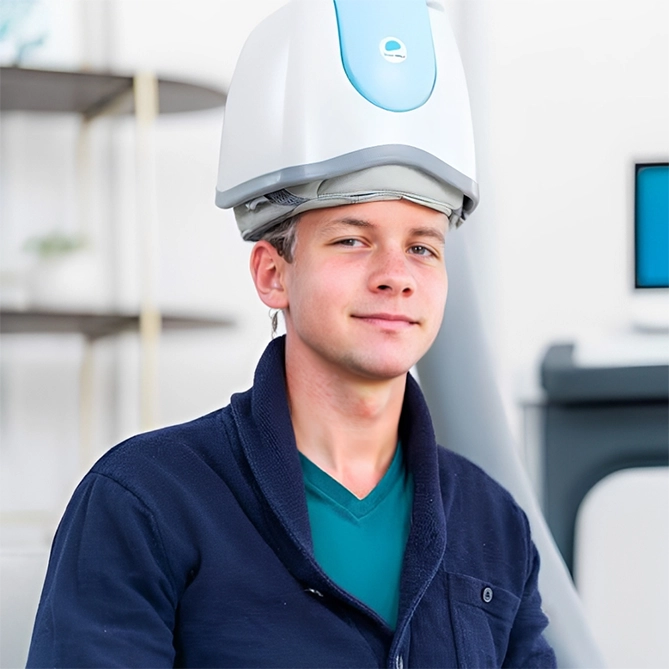
Is TMS Therapy Safe for Teens?
This is usually the first question parents ask, and the safety data is reassuring.
In the study of 1,257 young patients, side effects were mild and temporary, mostly headaches, fatigue, and some scalp discomfort during sessions.
Since nothing enters the body, TMS avoids the systemic side effects that often come with medication, such as weight changes or drowsiness. For many families, this is one of the biggest reasons they consider it.
Who Should Consider TMS Therapy for Their Teen?
Your teen may be a candidate for Deep TMS if they:
- Are between 15 and 17 years old (young adults up to 21 also qualify)
- Have been diagnosed with Major Depressive Disorder
- Have tried antidepressant medication without satisfactory improvement
If this sounds like your teen, the best next step is a free phone consultation. We’ll talk through their history and give you an honest answer about whether TMS makes sense.


Is TMS Therapy for Teens Covered by Insurance?
Yes, coverage is growing quickly. The 2025 FDA clearance opened the door for insurance plans to begin covering TMS for patients under 18. Plans with adolescent TMS coverage now include UnitedHealthcare, Aetna, Cigna, Humana, and Highmark Blue Cross Blue Shield, and new plans are being added regularly.
Coverage details vary from plan to plan, so the easiest way to find out is to call us. Tell us your insurance, and we’ll help you verify your teen’s benefits.
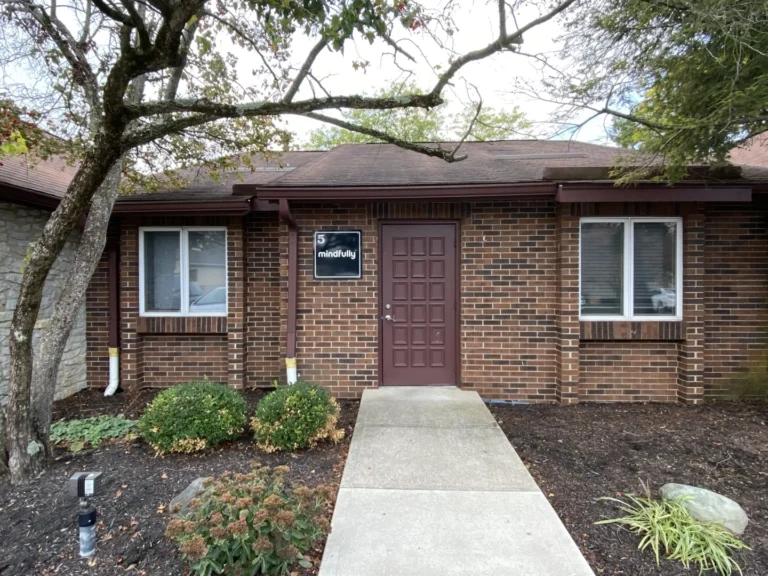
Trusted Teen TMS Clinic in Fairfield, OH
Our adolescent TMS program is located at the Mindfully Psychiatry office in Fairfield, OH and is led by our psychiatrist, Dr. Naskar.
This office also offers psychotherapy and medication management, so your teen’s full care can stay in one place.
What to Expect During Your Teen's TMS Treatment
If it’s a good fit, treatment is administered five times a week over six to eight weeks. Each session lasts about 20 minutes, and many families schedule them before or after school so daily life isn’t disrupted.
A Final Word for Parents
If you’ve been trying to help your teen for a long time, it can start to feel like nothing works. But every medication they tried and every appointment you made is part of the record that qualifies them for TMS today.
Their treatment history isn’t a list of failures. It’s proof of how hard you’ve both been trying. And now there’s a new option to try together.