
When you are navigating the heavy fog of chronic depression or anxiety, the search for relief can feel like an endless loop. You go to therapy, you do the homework, you try the medications, and yet, that breakthrough you desperately need always feels just out of reach.
If you are feeling a mix of hope and exhaustion, please know that your feelings are valid. You aren’t doing anything “wrong,” and you are not “untreatable.”
For decades, mental health care was split into two camps: treating the biology (with medication) or treating the psychology (with talk therapy). But humans aren’t split like that. Our brains and our behaviors are deeply connected.
Today, a more integrated mental health treatment approach is changing the landscape. By combining Transcranial Magnetic Stimulation (TMS) with traditional counseling, we can address the biological weight of depression while simultaneously building the psychological tools needed for long-term recovery.
In this blog, we are taking a closer look at this multimodal approach and why it may be the most complete path to recovery for those who have tried everything else.
Understanding TMS Therapy
To understand the effectiveness of combined treatment, it is important to look at the biological causes of depression. In individuals with treatment-resistant depression, specific regions of the brain responsible for mood regulation show significantly reduced activity. These neural pathways become under-stimulated, making it difficult for the brain to maintain emotional balance, motivation, or focus.
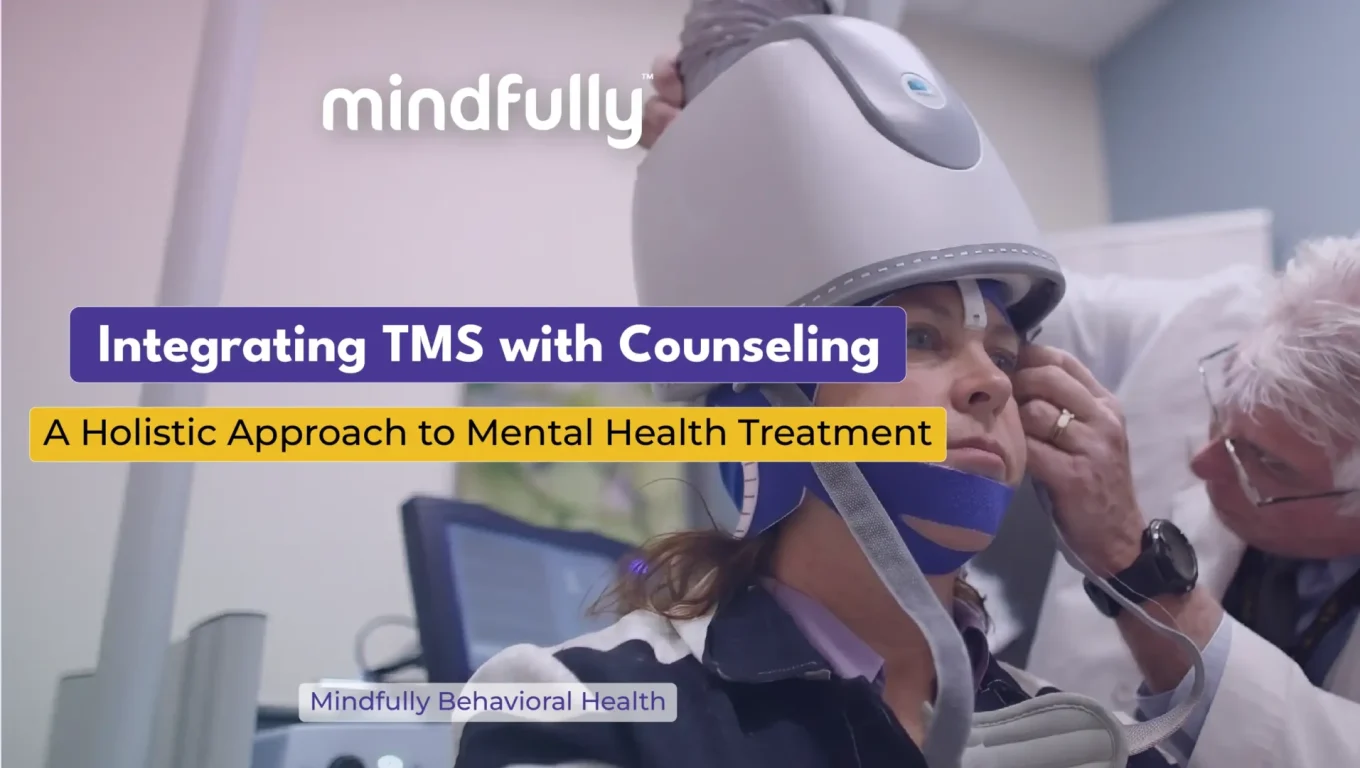
Transcranial Magnetic Stimulation (TMS) is a non-invasive medical treatment that addresses this biological inactivity. It uses medical-grade magnetic pulses to target and stimulate these specific underactive areas.
TMS differs from traditional medication in several key ways. Unlike medication, which enters the bloodstream and affects the entire body, TMS is a targeted therapy that works only on the areas of the brain involved in mood regulation. Because it is not systemic, it does not carry the common side effects associated with medication, such as weight gain, nausea, fatigue, or emotional blunting. Most importantly, the magnetic pulses encourage neurons to fire more frequently, directly promoting neuroplasticity; the brain’s ability to reorganize and form new connections.
By directly addressing the brain’s physical function, TMS provides a biological foundation that enables other forms of treatment, such as counseling, to be more effective.

Ready to Try TMS Therapy?
TMS directly targets the biological side of depression, helping your brain regain balance without the side effects of medication. If you’ve been feeling stuck, this could be the breakthrough you’ve been looking for.
The Role of Counseling in Developing Psychological and Behavioral Skills
While TMS addresses the brain’s biological function, counseling focuses on cognitive and behavioral patterns that influence mental health. If TMS is used to increase neural activity, counseling is used to manage the thoughts and actions along those active pathways.
This integrated approach ensures that biological improvements are supported by practical psychological tools. During counseling sessions, you work with a professional to identify and shift negative thought patterns, process past trauma or grief, and develop healthy coping strategies for life’s triggers. In this model, counseling provides a framework for navigating life’s challenges while building the skills needed to sustain the progress achieved through biological treatment.
The Synergy: Why Brain and Behavior Must Heal Together
This is where the magic happens. The reason combining TMS and therapy is so powerful is that it follows a natural chain of healing: Biological → Psychological → Behavioral.
Think of your brain like a garden. If the soil is frozen solid, it doesn’t matter how many good seeds you plant; nothing will grow.
TMS “thaws” the soil by using magnetic pulses to encourage neuroplasticity, the brain’s physical ability to adapt and form new connections. It prepares the brain to learn. Counseling then “plants the seeds.” While the brain is in this new state, the work you do in therapy sticks. Cognitive restructuring becomes easier because your brain is biologically capable of holding onto those new patterns.
TMS gives you symptom relief and energy to show up for therapy, and counseling gives you the skills to create lasting behavioral change.
Benefits of the Combined Approach
Here is why an integrated mental health treatment plan is worth considering. Patients who walk this dual path often notice several distinct shifts.
Many find that therapy sessions become much more productive. You aren’t just fighting to survive the session; you are actively learning and growing. The fog of depression that once made emotional work feel impossible begins to lift, giving you the energy actually to engage.
For many, this drug-free, non-invasive combination also allows them to rely less on medications that carry frustrating side effects. And while TMS resets the brain’s activity, therapy simultaneously builds the mental tools needed to handle future stressors, creating a safety net that extends well beyond the treatment itself.
Which Types of Counseling Work Best with TMS?
Because TMS actively promotes neuroplasticity, the brain enters a period of heightened receptivity, a window where psychological work is not just possible, but significantly more effective. During this time, certain evidence-based counseling approaches tend to yield the strongest results.
Cognitive Behavioral Therapy (CBT) is one of the most natural pairings and one of the most used modalities for individual therapy for adults applied at Mindfully. CBT focuses on identifying and restructuring the negative thought patterns that fuel depression and anxiety. When the brain is biologically primed to form new connections, the rewiring that CBT encourages happens with far less resistance. Patients often find that insights that once felt out of reach begin to take hold more naturally.
Dialectical Behavior Therapy (DBT) works especially well for those who struggle with emotional regulation, impulsivity, or chronic distress. DBT teaches practical skills in mindfulness, interpersonal effectiveness, and distress tolerance, skills that are far easier to absorb when the brain is no longer locked in a depressive state.
EMDR (Eye Movement Desensitization and Reprocessing) is particularly powerful for individuals whose depression or anxiety is rooted in unresolved trauma. As TMS calms overactive stress responses in the brain, EMDR can process painful memories more safely and effectively, without the emotional overwhelm that often interrupts trauma work.
Exposure and Response Prevention (ERP) is the leading therapeutic approach for OCD, and it pairs exceptionally well with TMS treatment. By reducing the compulsive urgency that OCD creates, TMS allows patients to engage more fully in the gradual exposure work that ERP requires.
When Should You Get Therapy During TMS Treatments?
The most effective approach is to get therapy concurrently with your TMS treatment, not after it concludes. As TMS begins to lift the weight of depression in the early weeks, motivation returns and emotional bandwidth opens up. This is precisely when counseling becomes most productive, because you finally have the clarity to engage with the work rather than just survive it.
Waiting until TMS is finished means missing the most important window. The brain is most receptive to new patterns during active stimulation. Starting therapy too late is like preparing the soil, watching it become fertile, and then planting the seeds a season too late.
For most patients, once or twice a week throughout the TMS course works well. Some prefer to schedule therapy on the same day as a TMS session while the brain is already activated. Others space them out to avoid fatigue. Your treatment team can help you find the rhythm that fits your energy and schedule.
The Holistic View: Sleep, Stress, and Support
True healing does not begin and end in a clinical setting. What happens between sessions matters just as much as the treatment itself. Sleep, nutrition, and movement are not optional add-ons; they are the raw materials the brain needs to carry out the rewiring that TMS initiates. When the body is consistently deprived of rest or proper fuel, it becomes harder for the brain to hold onto the new patterns that therapy is working to build.
Managing stress outside the clinic is equally important. Simple daily practices like meditation, breathwork, or even quiet walks help regulate the nervous system and preserve the emotional balance that treatment is working to restore. These are not grand lifestyle overhauls; they are small, consistent habits that compound over time.
Perhaps most overlooked is the role of human connection. Depression is isolating by nature, and recovery can feel like a solitary road. But healing deepens in the community. Reconnecting with family, rebuilding friendships, or finding a support group provides a layer of stability that no clinical treatment alone can offer.
Who Is a Good Candidate for This Combined Path?
This approach is ideally suited for those who feel stuck in a holding pattern, where existing treatments have provided only partial relief or none at all. If medication has not delivered the results you hoped for, or if the side effects have become a burden of their own, the combined path of TMS and counseling offers a meaningful alternative worth exploring.
More broadly, this path is for anyone ready to approach their mental health from both a biological and psychological direction at once, not as two separate treatments, but as a single, unified plan built around how the brain actually heals.
Final Thoughts
The path to mental wellness is rarely solved by pulling a single lever. If you have tried medication, tried therapy, and still feel like you are fighting the same battle, that is not a failure of will. It is a sign that the approach needs to change, not you.
By integrating TMS with counseling, we stop treating the brain and the mind as separate problems requiring separate solutions. TMS gives the brain the biological foundation it needs to function, and counseling gives you the tools to build something lasting on top of it. One without the other leaves the work half done.
If you are ready to take a step that addresses both the biology and the psychology of what you are experiencing, this combined path may be exactly what has been missing.