
You have been fighting depression for a long time, and even medication hasn’t helped. It has been a real struggle, but is there an end to it? This is one of the most common questions we hear from patients who come to us for Deep TMS. And honestly, they are right to ask it.
Medication management doesn’t work for one-third of people with depression. This is called treatment-resistant depression. Sometimes the relief you have been searching for lies in a different kind of treatment altogether: Deep TMS (Transcranial Magnetic Stimulation). Deep TMS has been FDA-approved for major depression for over a decade. The research is strong, and the success rates are well documented.
Once you have heard that TMS might be the next step, you may ask, “Will TMS be covered by my insurance plan?“
Unfortunately, insurance coverage has gotten more complicated these days. We wish it were simpler. But don’t worry! In this blog, we will walk you through what insurers look for, which plans Mindfully accepts, and how to know where you stand. If you want to check your eligibility early, you can start with our insurance verification request form.
Why Insurance Coverage for TMS Feels More Complicated
So why does getting your insurance to approve TMS feel harder than it should?
This is not because TMS has become any less effective. It is because the insurance industry has become more diligent. As a result, many insurance companies want to see more records before they will approve coverage.
For someone already carrying the weight of depression, this extra layer can feel like a paper wall standing between you and the relief you need.
But here is the good news. Once you know what insurers are actually looking for, the process becomes much less overwhelming. And once you have a team to help you with the paperwork, what feels like a wall becomes a doorway.
Insurance Plans That Cover Mindfully’s Deep TMS Therapy
If you have tried to find a clear list of insurance plans that cover Deep TMS online, you have probably noticed how little real information is out there. The details are scattered, vague, or buried in technicalities. It leaves most people feeling more confused than when they started.
That is why we want to make this part as simple as possible. At Mindfully, Deep TMS coverage is broader than most people expect, and we are always working to add new insurance providers to make this treatment as accessible as possible.
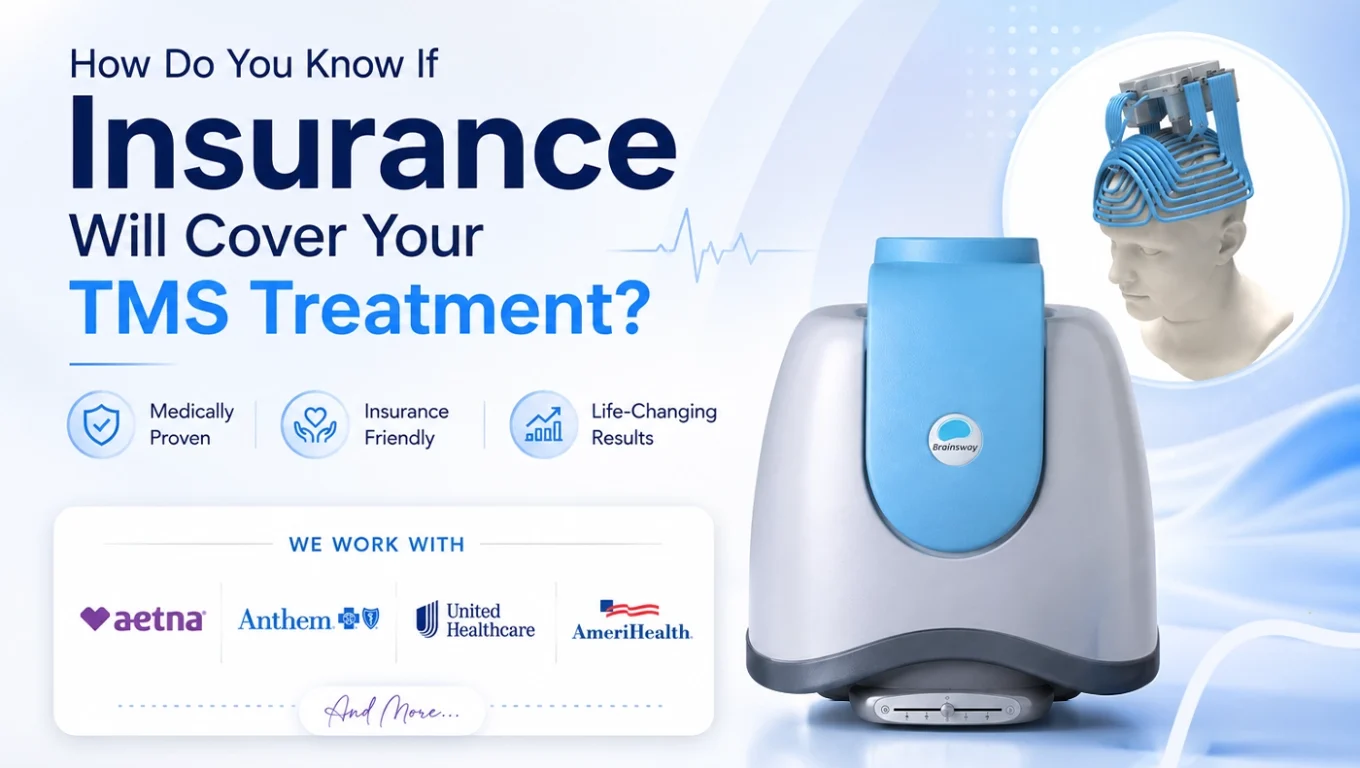
Mindfully accepts the following insurance plans for Deep TMS. We are always adding more insurance coverage, so please contact us if you don’t see your plan listed:
| Aetna | Cigna | Optum |
| Anthem | Humana | Paramount |
| Ambetter | Magellan | Surest |
| AmeriHealth (MCD) | Medica | Tricare |
| Beacon | Medicaid | United Medical Resources (UMR) |
| Buckeye | Medicare | United Health Care (UHC) |
| Caresource | Molina | Wellcare |
| Centene | Medical Mutual of Ohio (MMO) | And more |
Of course, every plan has its own details, deductibles, and approval steps. That is why our care team verifies your specific benefits before you begin treatment. You should never have to start something this important while wondering what it will cost. We will check everything for you upfront, so you know exactly where you stand. If you would like us to review your insurance details, you can submit them through our TMS services request form.
Does Medicare Cover TMS Therapy?
Medicare covers Deep TMS for eligible beneficiaries. In fact, there’s no preauthorization process with Medicare, so you can get started with TMS treatment right away. And for many patients with a Medigap policy (i.e., a Medicare Supplemental Insurance), this means little to no out-of-pocket cost. You can read more about Medicare and TMS coverage here.
The One Qualification That Matters Most
If you have done your homework on Deep TMS, you have probably come across a phrase: “treatment-resistant depression.“ It is the clinical term most insurance companies use to describe the patients they will approve for TMS.
At Mindfully, we prefer a more accurate term: medication-resistant depression. Because here is what the language really means. It does not mean you have failed treatment. It means the specific medications you tried failed to reach the circuits in your brain that needed help.
So what does this look like in practice? To approve TMS, most insurance companies want to see that you have tried at least two different antidepressant medications without the relief you were hoping for. This is not a hurdle they invented to slow you down. It is the medical threshold that confirms that the medication, despite your best efforts, did not solve your depression.
The catch is that the insurance company needs your complete medication history to verify this. Your word, and even your psychiatrist’s word, is usually not enough. Instead, your insurance company will need to review your full medication record.
If you have been with the same psychiatrist and/or primary care physician for many years, this might be one quick phone call. For others, the following section shares how to gather your records.
How to Gather Your Records (Without the Stress)
Gathering years of medical history sounds overwhelming, especially when your energy is low. Here are the simplest ways to retrieve your records:
- The Pharmacy Shortcut: Your local pharmacy (e.g., CVS, Walgreens, Kroger, etc.) keeps a digital record of every prescription you’ve filled. You can request a “Patient Prescription History Report” for the last 2–3 years.
- Insurance Member Portals: Log in to your insurance website (e.g., MyUHC or Aetna Navigator). You can usually download a “Claims History” or “Pharmacy History” PDF that lists everything they’ve paid for on your behalf.
- Patient Portals (e.g., MyChart): If your doctors are part of a large hospital network, your medication history is likely already listed under the “Medications” tab in your portal. A simple screenshot or PDF download is all we need.
- The Direct Request: You can call your previous doctor’s office and simply ask for a “Medication Log.” They are legally required to provide this to you.
- Let Us Help: If you can remember the names of the clinics you attended, our care coordinators can send a medical records release form and do the heavy lifting for you.
You can also take help of our exclusive guide: Top Tips for Retrieving Medication Rx Records.

Taking the First Step
This self-assessment only takes 1 minute to see if TMS is right for you.
Final Thoughts
When you look at your list of past medications, it is easy to feel a sense of grief. It can look like a long record of things that did not work for you.
But at Mindfully, we see it very differently. That prescription history is the documentation of your resilience.
Every pill you took. Every week, you waited for the relief that never came. Every appointment you kept on a day you did not feel like getting out of bed. Each one of those was an act of courage. They prove that you have been fighting, and they prove that you have done everything the standard system asked of you.
The paper wall is not there to stop you. It is there to show the world that it is time for a new solution. You have fought for too long. Let us handle the paperwork so you can finally focus on the end of the struggle.