When you’re living with depression, it can feel like a heavy weight is pressing down on everything, making joy and motivation feel out of reach. Choosing the right path in your depression treatment is a critical step. With options like Transcranial Magnetic Stimulation (TMS) and antidepressants, it can be hard to know what’s best for your history and hopes for healing. This guide is here to help.
We’ll compare both treatments on their effectiveness, daily experience, and cost. Our goal is to provide a clear picture, empowering you to make a confident and informed decision about the journey that is right for you.
What Is TMS? And How Does It Work?
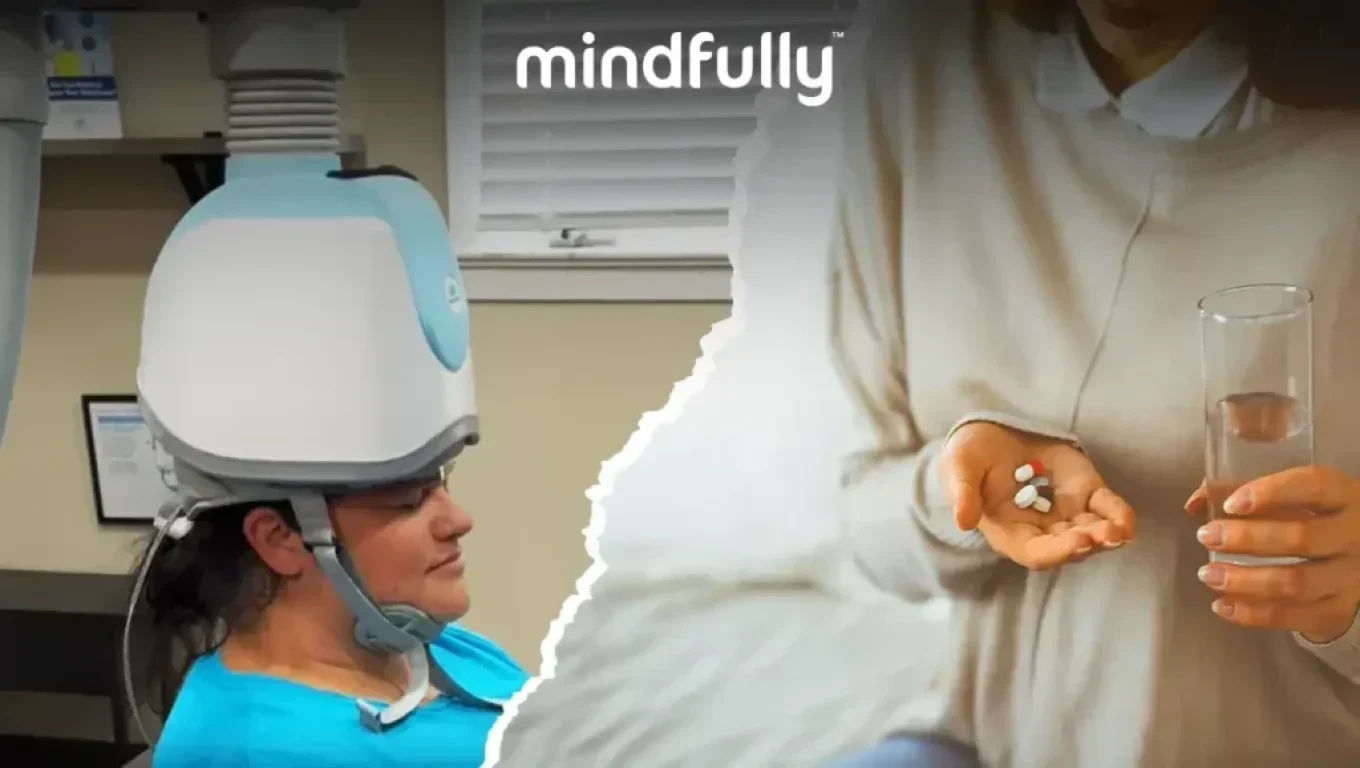
Imagine the part of your brain controlling mood has gone quiet. Transcranial Magnetic Stimulation (TMS) acts as a gentle, targeted wake-up call. This non-invasive therapy uses a small coil on your head to deliver light magnetic pulses, reawakening underactive brain circuits involved in mood regulation.
TMS is a simple outpatient procedure that requires no medication or anesthesia. You can return to your daily activities immediately after each session, making it a convenient and effective option for many.
What Are Antidepressants?
Antidepressants are medications that work to gently restore the brain’s natural mood-lifting, providing support so you can start to feel lighter and more like yourself again.
Antidepressants are taken as a daily pill, and it can take 4 to 6 weeks to feel the full benefits as your body adjusts. Finding the pill that works best for you is a process you and your psychiatrist need to navigate together.
Who Is A Good Candidate for Each Treatment?
So, which treatment is the right one for you? For many people, the journey to feeling better begins with antidepressants, often combined with therapy. This is an important first step to see if medication can provide the relief you’re looking for.
However, if you’ve tried at least two rounds of antidepressants without success, there is hope. In fact, as many as one-third of people who have depression may have treatment-resistant depression. For people who do not respond to antidepressants, Transcranial Magnetic Stimulation (TMS) is a powerful, FDA-approved treatment. It is a promising next step when medications haven’t been the right answer.
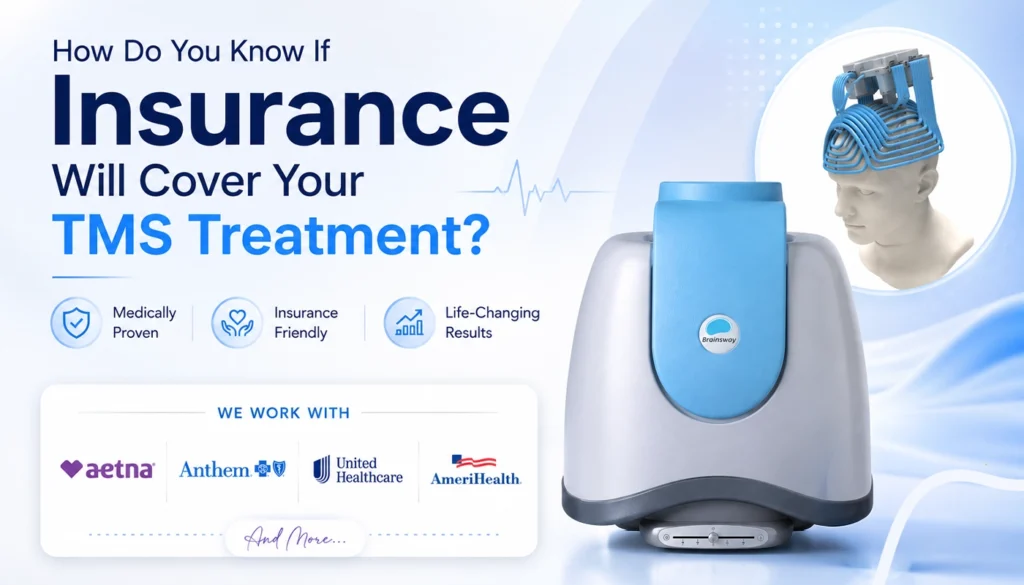
In order for TMS treatment to be covered by insurance, there are a few exclusionary requirements, including at least two previous rounds of antidepressants, being clean and sober for at least 30 days, and no metal in the head, neck, or shoulders. You can see if you qualify for TMS by taking this test.
What Research Says About TMS Therapy vs Antidepressants?
When considering your next step, the clinical data provides a clear comparison. Research on antidepressants, particularly the major STAR*D trial shows a pattern of diminishing returns. After two unsuccessful medication trials, the likelihood of achieving remission with a third is only 13-20%.
In stark contrast, studies on TMS for the same patient population tell a different story. Research consistently demonstrates that 30-40% of these individuals achieve full remission. This highlights TMS as a statistically superior option for those with treatment-resistant depression.
How Soon Could I Feel Better? (Speed & Time Commitment)
The timeline for relief varies by treatment. Antidepressants work slowly and steadily in the background. This gradual journey requires taking a daily pill and waiting 4 to 6 weeks to know if it’s providing relief. The commitment is a quiet, daily one as your body slowly adjusts and the medication takes full effect.
In contrast, TMS is a more structured and active journey. While it requires a commitment to daily sessions for 4 to 6 weeks, many people notice significant improvements even in the first few weeks.
How Each Treatment Impacts Your Daily Life
Each treatment path requires a different kind of investment in your well-being and daily life.
With antidepressants, the investment is physical. While the daily time commitment is minimal, your entire body must adjust to systemic medication. For some, managing the resulting side effects, such as fatigue, nausea, or fogginess, can become a significant, daily challenge.
With TMS, the investment is your time. It requires planning and commitment to attend a daily TMS treatment session. However, many find this a worthwhile trade-off. Once the brief treatment is over, you can return to your day feeling clear and unburdened by the systemic side effects that medication can cause..
Cost, Insurance & Affordability

Understanding the cost of treatment shouldn’t be another source of stress. While antidepressants are typically affordable, often just a pharmacy copay, TMS is also a covered benefit for most major insurance plans, including Medicare, when medications haven’t worked. The out-of-pocket costs for TMS will depend on your exact insurance coverage.
At Mindfully, we make the process simple. Our team handles the entire insurance verification for you, providing a clear breakdown of your coverage before you commit. We offer unique advantages, like no-wait starts for Medicare patients and accelerated treatment schedules, powered by our advanced Deep TMS technology, to help you feel better, faster. For those paying directly, we provide clear, upfront pricing so there are never any surprises. Your path to care will be clear and straightforward.
Can I Combine TMS with Other Treatments?
It mainly depends on the clinic and your condition. Here at Mindfully, our entire approach is centered on creating a personalized treatment plan just for you. Our integrated team of psychiatric providers and therapists collaborates to design the perfect combination of support. This might involve pairing TMS with psychotherapy to deepen your healing, or using TMS to enhance your medication’s effectiveness. It’s a true partnership, designed to give you the best possible chance of finding lasting relief.
What to Expect:
The way these treatments begin feels profoundly different, right from day one. To give you a clear picture, here’s what you can expect from each path:
- Starting an Antidepressant: Your journey begins with a conversation with your psychiatric provider and taking your first medication. From there, it becomes an internal process of patience as you wait several weeks to notice a shift in how you feel.
- Your First TMS Session: This is a collaborative, hands-on experience. Your first visit is dedicated to creating your personalized treatment map by finding the precise location and energy level for you. You’ll feel a gentle tapping during the brief session and can then get right back to your day. It feels like taking an immediate, active step toward your own healing.
Side Effects & Safety: What Will This Actually
The key difference lies in how they affect your body. Antidepressants and TMS both affect your body differently. This explains their fundamentally different side effect profiles.
What Antidepressants Can Feel Like
Starting a new medication often involves an adjustment period as your body gets used to it. Since antidepressants circulate throughout your system, you might experience side effects like nausea, disrupted sleep, or changes in libido. For many, these feelings are mild and fade over time, but for some, they can be a difficult, persistent part of their healing journey.
What TMS Feels Like
In complete contrast, the TMS experience is localized and brief. You’ll be seated in a comfortable chair for a short session, feeling a rhythmic tapping on your scalp. While the sensation can be strange, people find it tolerable. Because TMS is not a drug circulating through your body, there are no systemic side effects. You can leave the clinic and go right back to your day, feeling clear and like yourself.
The Right Plan for You Is Just One Conversation Away
Your journey with depression is unique, and your treatment should be too. At Mindfully, we move beyond one-size-fits-all solutions to create a personalized recovery plan just for you. Our compassionate experts will listen to your story to understand your specific needs and hopes. Together, we’ll map out the most effective path forward, whether that includes TMS, medication, therapy, or a combination of all three.
You don’t have to settle for a plan that isn’t working. Let us help you find the one that does. Your journey to feeling better starts today.

Let’s Find What Actually Works for You
If your current treatment isn’t delivering the results you need, it may be time for a different approach. TMS offers a targeted, non-medication option designed for people who are ready for real change.